Report
The Impact of Intelligent Steerage on Medical Spend: A HealthJoy Savings Analysis
This third-party validated report quantifies what that navigation gap costs and what happens when it's closed. By matching HealthJoy-guided claims against an identical control group, procedure by procedure, we isolated the true price difference between guided and unguided care.
HealthJoy
·
·
8 min read
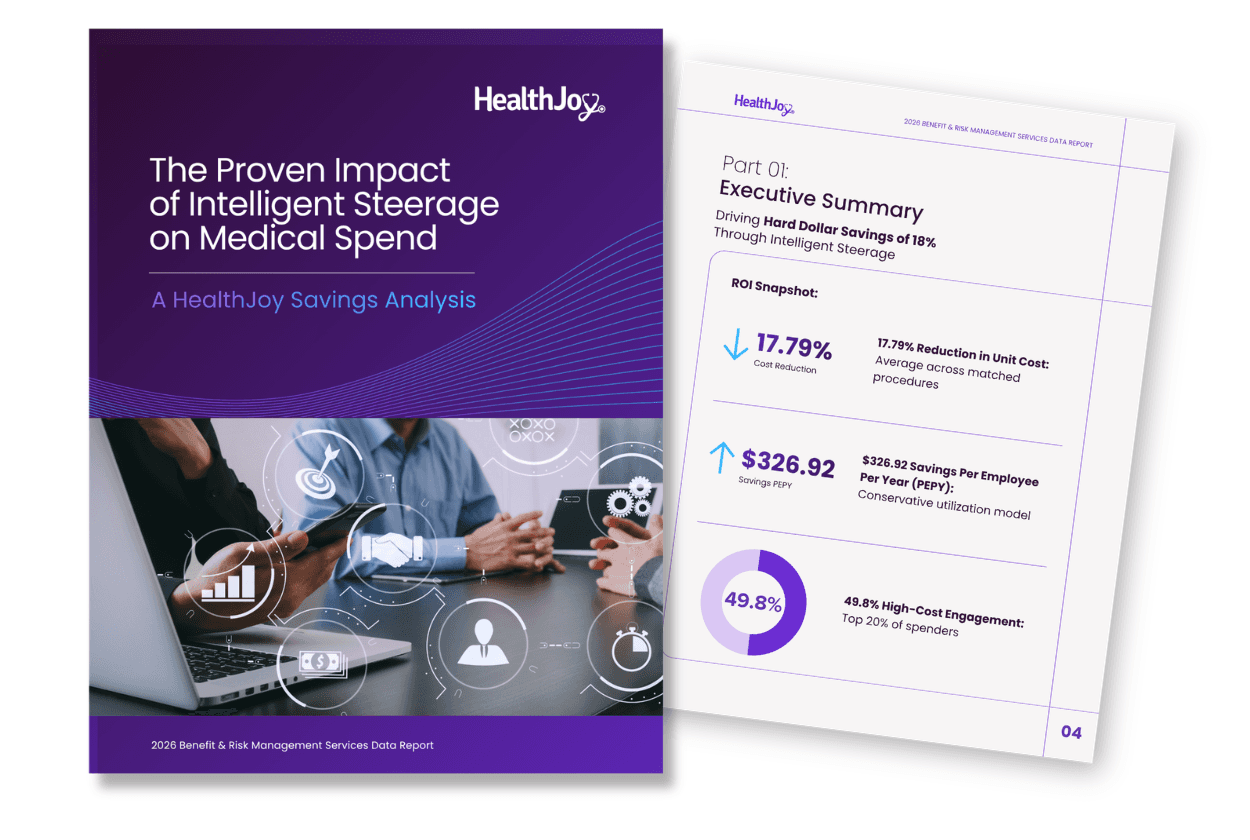
HealthJoy analyzed 6,011 matched procedures (real adjudicated claims) comparing what members paid when guided by HealthJoy versus when they navigated care on their own. The findings were independently validated by Axene Health Partners, a leading health actuarial consulting firm.
The result? A 17.79% reduction in unit cost of care, translating to $326.92 in savings per employee per year. This report shows exactly where those savings come from and why the number is only part of the story.
Healthcare pricing is more variable than most healthcare leaders realize. Two providers offering the exact same service, both in-network, can charge dramatically different amounts because being in-network only means a provider agreed to a discount, not the same discount. Most members have no way of knowing this when they choose a provider.
This third-party validated report quantifies what that navigation gap costs and what happens when it's closed. By matching HealthJoy-guided claims against an identical control group, procedure by procedure, we isolated the true price difference between guided and unguided care. No selection bias. No comparing apples to oranges. Just the unit cost of the same service, bought two different ways.
The findings are broken down by category including specialist visits, mental health, labs, and validated by Axene, an independent actuarial firm. You'll also get to see how the savings compound for high-cost claims: among the most expensive procedures in the dataset, HealthJoy-guided cases cost three times less per code than unguided ones.
Download the report to see the full methodology, category-level results, and what this could mean for your plan or your clients.

Blog Post
AI in Benefits 101: One Year Later — What It Actually Takes for Employees to Trust AI with Their Benefits

Blog Post
AI Can Be Responsible for the Outcome. It Can't Be Accountable for It.
When AI handles the routine, humans get to work on what matters most. Not less work, more meaningful work. The benefits experience is full of moments that are genuinely high-stakes, deeply personal, and impossible to reduce to a transaction. Those moments don't disappear when AI arrives. They become the work.