Webinar
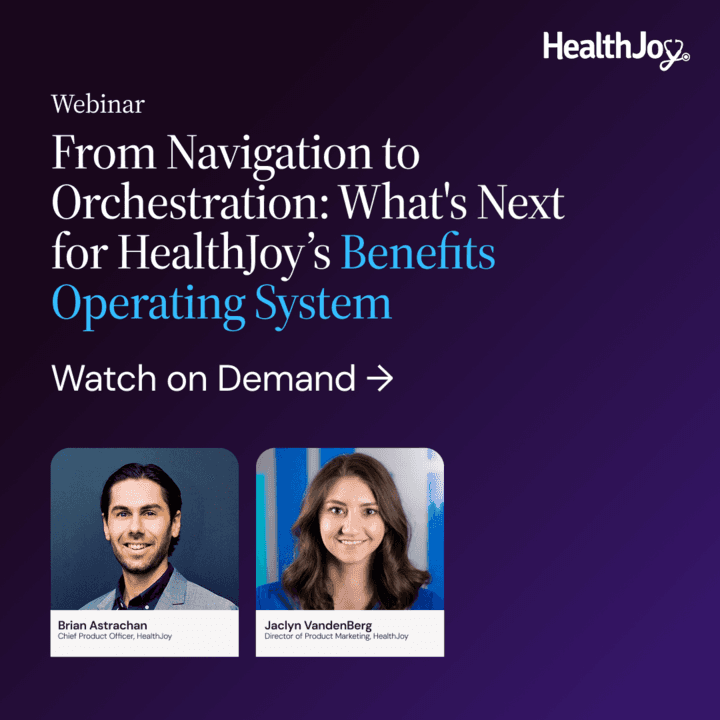
On Demand: From Navigation to Orchestration: What's Next for HealthJoy's Benefits Operating System, on demand
HealthJoy is pioneering a new era of benefits: end-to-end orchestration. Watch our webinar as we reintroduce HealthJoy’s Benefits Operating System: the platform that connects benefits strategy to the decisions employees actually make, from enrollment through every care decision across the full plan year.
HealthJoy
·
·
8 min read
Benefits is the second-largest line item on the P&L, yet there’s no real system to run them. Employees guess their way through enrollment, use their benefits reactively, and take the path of least resistance. The result: underutilized programs and unnecessarily expensive claims. The strategy behind benefits deserves a system that makes them perform the way you’ve intended.
HealthJoy is pioneering a new era of benefits: end-to-end orchestration. Watch our webinar as we reintroduce HealthJoy’s Benefits Operating System: the platform that connects benefits strategy to the decisions employees actually make, from enrollment through every care decision across the full plan year.
In this session, we’ll demonstrate our upcoming product enhancements. See how we’re expanding our benefits operating system into moments where benefits have never really had support before. We’ll also show you exactly how they work together to close the gap between strategy and execution.
In this session, you’ll learn:
What end-to-end benefits orchestration means and why the industry needs this category
How the benefits operating system shows up at enrollment and every care decision throughout the plan year
How our enhancements including Enrollment Decision Support, an integrated Wellness program and Incentives expand the system into moments where benefits have never had support previously
What the Benefits OS means for benefits strategy performance and ROI at renewal

Blog Post
AI in Benefits 101: One Year Later — What's Changed and What It Means for HR Leaders Now
In the past twelve months, AI hasn't just evolved, it's proliferated. The number of vendors claiming AI capabilities has exploded, the vocabulary has gotten more complicated, and the pressure on HR leaders to have an informed point of view has only intensified.

Blog Post
Three Things That Change When Employees Get Real Enrollment Guidance
Better plan selection leads to better care decisions. Better care decisions lead to lower cost trend. Lower cost trend leads to a very different renewal conversation.