Resources
Insights From HealthJoy
Insights From HealthJoy
Curated resources, insights, and perspectives from the HealthJoy team, built for benefits leaders, consultants, and the people shaping healthcare today.
Curated resources, insights, and perspectives from the HealthJoy team, built for benefits leaders, consultants, and the people shaping healthcare today.

Blog Post
Three Things That Change When Employees Get Real Enrollment Guidance
Better plan selection leads to better care decisions. Better care decisions lead to lower cost trend. Lower cost trend leads to a very different renewal conversation.
·
Webinar
15 Minutes to Smarter Open Enrollment
HealthJoy's Enrollment Decision Support (EDS) was built to change that, and we want to show you exactly how it works. No pitch. No fluff. Just Enrollment Decision Support in 15 minutes.
·

Blog Post
What Smart Consultants Are Telling Clients About Open Enrollment Right Now
Every plan selection decision an employee makes during enrollment ripples through the next 364 days, affecting their care choices, their out-of-pocket costs, and ultimately, their employer's cost trend. When employees land on the wrong plan, nobody wins. Employees overpay or underinsure and employers absorb the downstream consequences all year long.
·

Webinar
Watch On Demand: The Predictive Advantage: Leveraging Real-Time Member Intent to Control 2027 Costs
HealthJoy’s latest insights from our 2026 Member Health Goals report — drawn from 106,000+ real member responses — give you a real-time look at the health trends emerging right now, months before they show up as claims on your plan.
·

Blog Post
The Gen Z Warning: Why Your Youngest Employees Are Sending an Early Signal
Rising prescription costs among the youngest members of a workforce should prompt a specific question: why are members in their early twenties needing more medication than they did a year ago?
·

Blog Post
The 12-Month Warning: Your Members Are Already Telling You What Your 2027 Claims Will Look Like
Most benefits strategies are built on a data signal that arrives too late to change outcomes. Claims data is the most available signal for managing population health risk, but it's a lagging one.
HealthJoy
·
Press
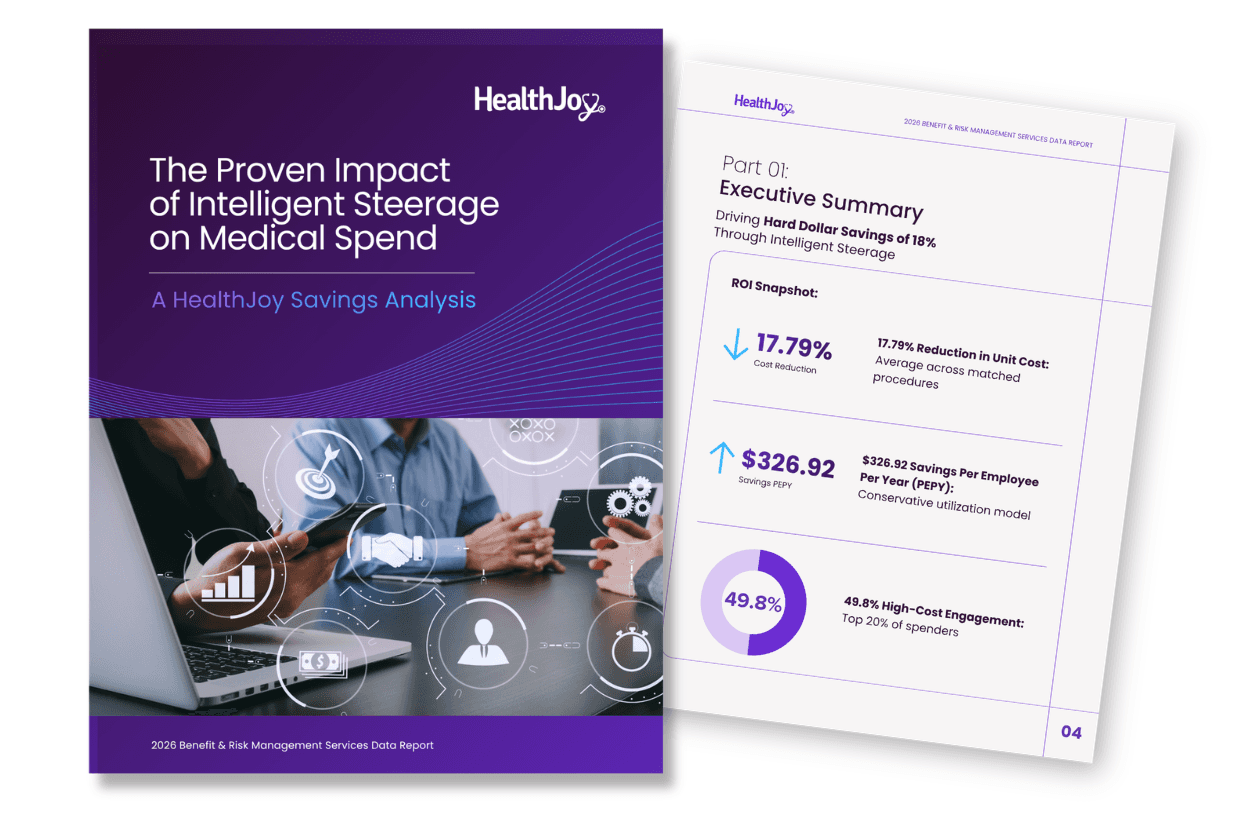
HealthJoy's Benefits Operating System Drives 18% Savings on Medical Procedures Through Intelligent Steerage
Independent analysis confirms HealthJoy saves $327 per employee per year by influencing heavy utilizers and high-volume care categories
HealthJoy
·

Press
HealthJoy Partners with Vālenz Health® to Connect Employees to Lower-Cost Procedures and Cancer Care
Bundled Valenz solutions for surgeries, imaging, specialty infusions, and catastrophic care bundles now fully integrated into HealthJoy’s Benefits Operating System to drive additional 50%+ savings
·

Blog Post
What If Open Enrollment Was Your First Cost Control Move?
What employees need in that moment of decision isn't a PDF with more detail. It's personalized support that takes their actual health situation, household circumstances, and financial picture into account, and helps them choose with confidence. HealthJoy’s Enrollment Decisions Support (EDS) was built specifically to close that gap.
·

Blog Post
Why Open Enrollment Is the Most Expensive Decision Your Employees Make All Year
Open enrollment asks employees to do something most of them are never taught how to do: forecast their own healthcare needs a year in advance, compare plan designs full of unfamiliar terms, and pick the option that will save them the most money. The enrollment window is often short, so they are under time pressure — with no one checking their math.
·

Blog Post
Signals Over Samples: What 100,000 Members Are Telling Us About the 2027 Claims Landscape
The 2026 Member Health Goals Report draws on self-reported health intent data from 106,768 members — what they say they’re experiencing, planning, and struggling with, collected in real time. It’s directional rather than clinical, population-level rather than individually diagnostic, and it arrives months before any of it surfaces in a claims system.
·

Blog Post
The Millennial Cancer Surge: Why Your “Low-Risk” Population Is Your Newest Liability
Data from HealthJoy’s 2026 Member Health Goals Report reveals a troubling shift that demands attention before your next renewal: cancer diagnoses among members aged 26–35 surged 25% in just one year.
HealthJoy
·

Blog Post
The GLP-1 Policy Gap: What Every Employer Needs to Build Before Their Next Renewal
According to HealthJoy’s 2026 Member Health Goals report, nearly 60% of members have expressed weight loss intent. That’s not a fringe population. That’s the majority of your workforce quietly calculating whether their benefits will cover what they want and what their providers are increasingly willing to prescribe.
HealthJoy
·
Report
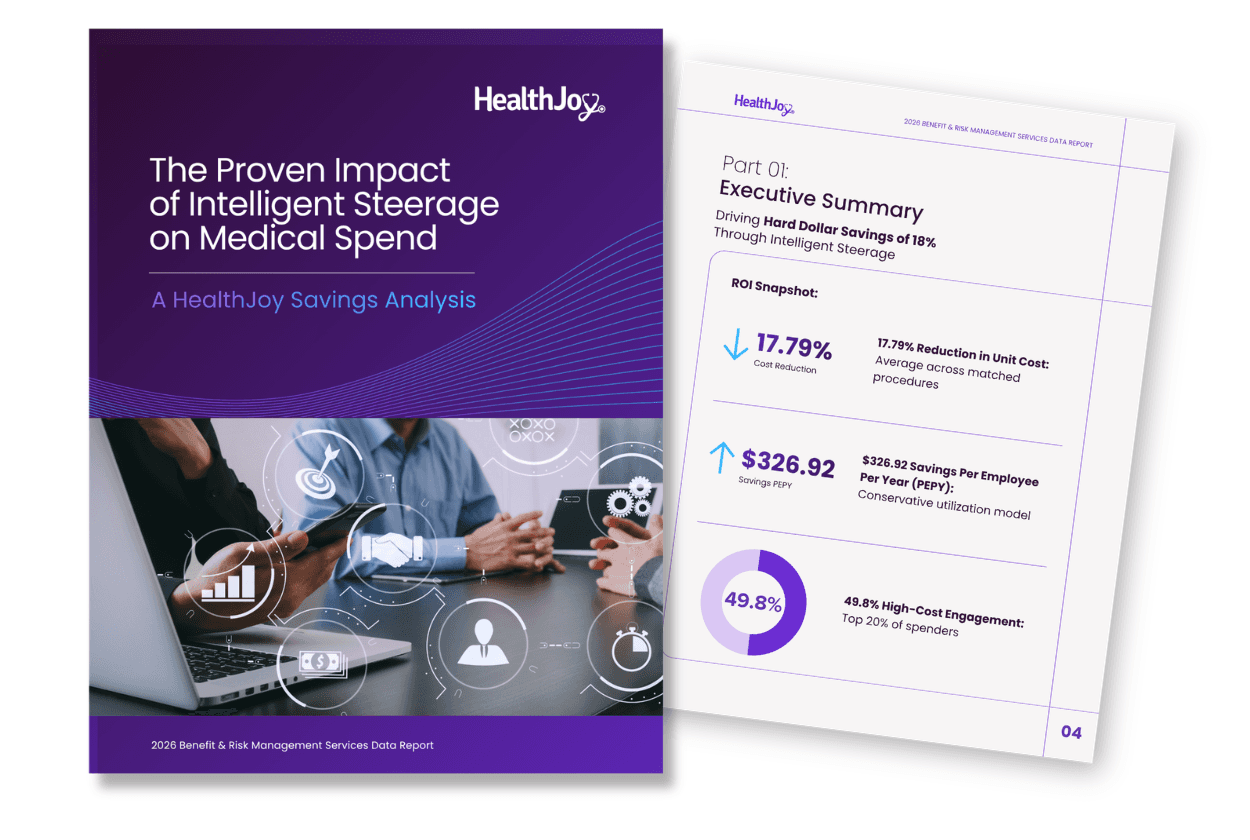
The Impact of Intelligent Steerage on Medical Spend: A HealthJoy Savings Analysis
This third-party validated report quantifies what that navigation gap costs and what happens when it's closed. By matching HealthJoy-guided claims against an identical control group, procedure by procedure, we isolated the true price difference between guided and unguided care.
HealthJoy
·
Blog Post
Three Things That Change When Employees Get Real Enrollment Guidance
Better plan selection leads to better care decisions. Better care decisions lead to lower cost trend. Lower cost trend leads to a very different renewal conversation.
·
Press
HealthJoy Partners with Vālenz Health® to Connect Employees to Lower-Cost Procedures and Cancer Care
Bundled Valenz solutions for surgeries, imaging, specialty infusions, and catastrophic care bundles now fully integrated into HealthJoy’s Benefits Operating System to drive additional 50%+ savings
·
Webinar
15 Minutes to Smarter Open Enrollment
HealthJoy's Enrollment Decision Support (EDS) was built to change that, and we want to show you exactly how it works. No pitch. No fluff. Just Enrollment Decision Support in 15 minutes.
·
Blog Post
What If Open Enrollment Was Your First Cost Control Move?
What employees need in that moment of decision isn't a PDF with more detail. It's personalized support that takes their actual health situation, household circumstances, and financial picture into account, and helps them choose with confidence. HealthJoy’s Enrollment Decisions Support (EDS) was built specifically to close that gap.
·
Blog Post
What Smart Consultants Are Telling Clients About Open Enrollment Right Now
Every plan selection decision an employee makes during enrollment ripples through the next 364 days, affecting their care choices, their out-of-pocket costs, and ultimately, their employer's cost trend. When employees land on the wrong plan, nobody wins. Employees overpay or underinsure and employers absorb the downstream consequences all year long.
·
Blog Post
Why Open Enrollment Is the Most Expensive Decision Your Employees Make All Year
Open enrollment asks employees to do something most of them are never taught how to do: forecast their own healthcare needs a year in advance, compare plan designs full of unfamiliar terms, and pick the option that will save them the most money. The enrollment window is often short, so they are under time pressure — with no one checking their math.
·
Webinar
Watch On Demand: The Predictive Advantage: Leveraging Real-Time Member Intent to Control 2027 Costs
HealthJoy’s latest insights from our 2026 Member Health Goals report — drawn from 106,000+ real member responses — give you a real-time look at the health trends emerging right now, months before they show up as claims on your plan.
·
Blog Post
Signals Over Samples: What 100,000 Members Are Telling Us About the 2027 Claims Landscape
The 2026 Member Health Goals Report draws on self-reported health intent data from 106,768 members — what they say they’re experiencing, planning, and struggling with, collected in real time. It’s directional rather than clinical, population-level rather than individually diagnostic, and it arrives months before any of it surfaces in a claims system.
·
Blog Post
The Gen Z Warning: Why Your Youngest Employees Are Sending an Early Signal
Rising prescription costs among the youngest members of a workforce should prompt a specific question: why are members in their early twenties needing more medication than they did a year ago?
·
Blog Post
The Millennial Cancer Surge: Why Your “Low-Risk” Population Is Your Newest Liability
Data from HealthJoy’s 2026 Member Health Goals Report reveals a troubling shift that demands attention before your next renewal: cancer diagnoses among members aged 26–35 surged 25% in just one year.
HealthJoy
·
Blog Post
The 12-Month Warning: Your Members Are Already Telling You What Your 2027 Claims Will Look Like
Most benefits strategies are built on a data signal that arrives too late to change outcomes. Claims data is the most available signal for managing population health risk, but it's a lagging one.
HealthJoy
·
Blog Post
The GLP-1 Policy Gap: What Every Employer Needs to Build Before Their Next Renewal
According to HealthJoy’s 2026 Member Health Goals report, nearly 60% of members have expressed weight loss intent. That’s not a fringe population. That’s the majority of your workforce quietly calculating whether their benefits will cover what they want and what their providers are increasingly willing to prescribe.
HealthJoy
·
Press
HealthJoy's Benefits Operating System Drives 18% Savings on Medical Procedures Through Intelligent Steerage
Independent analysis confirms HealthJoy saves $327 per employee per year by influencing heavy utilizers and high-volume care categories
HealthJoy
·
Report
The Impact of Intelligent Steerage on Medical Spend: A HealthJoy Savings Analysis
This third-party validated report quantifies what that navigation gap costs and what happens when it's closed. By matching HealthJoy-guided claims against an identical control group, procedure by procedure, we isolated the true price difference between guided and unguided care.
HealthJoy
·